
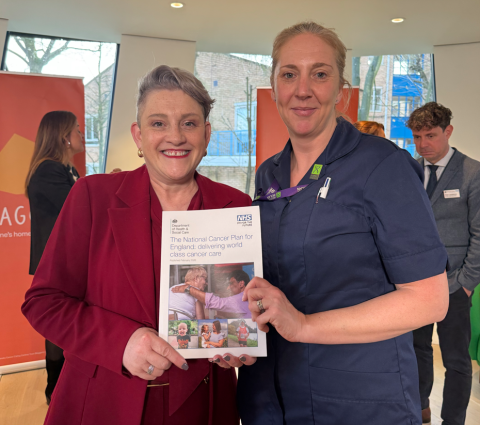
On World Cancer Day (4th February 2026), the Department of Health and Social Care published the National Cancer Plan for England, which sets out how the government intends to transform cancer services over the coming decade.
At the heart of the plan is an ambitious but welcome commitment: that 75% of people diagnosed with cancer from 2035 onwards will be cancer-free or living well five years after diagnosis. This is up from a projected 60% in 2022 and 50% in 2008.
If delivered in full, the government estimates the plan could save 320,000 lives – a bold target that not only recognises the fact the UK’s cancer survival rates are lower than in comparable countries, but also lays out a clear pathway to reverse years of slow progress.
For people living with blood cancer, where survival and timely diagnosis have long trailed behind other cancers, this commitment represents a real opportunity to improve outcomes and transform care.
So, what does the plan mean for people living with blood cancer?
We hear every day from people living with blood cancers and blood disorders, and from their families, about the financial strain of travelling for treatment. At Anthony Nolan, we know many of our grants are used for travel to and from treatment facilities, and that on average patients can lose around £30,000 in household income during treatment.
After several years of campaigning alongside Young Lives vs Cancer and the Teenage Cancer Trust, we are pleased to see a dedicated travel fund for young people with cancer included in the plan. The NHS in England will provide up to £10 million each year to help cover travel costs for children and young people receiving cancer care, as well as their families.
This funding is a significant and welcome step forward, but it is limited to cancer patients under the age of 24. We know that stem cell transplant and cell therapy patients of all ages, and across all disease types, face the same financial pressures. It is therefore vital that this fund is extended so no patient is left struggling to access the treatment they need.
Through our work with the Blood Cancer Alliance, we have also long called for a commitment to reduce the number of patients diagnosed in emergency settings, which is currently over a third of blood cancers. We are therefore delighted to see a commitment in this plan that finally addresses the long-standing absence of clear targets for people with blood cancer.
More broadly, the plan includes several commitments that could make a real difference for people living with blood cancer, including:
- A stronger focus on holistic care, with a commitment that every cancer patient will have access to a Clinical Nurse Specialist and a personalised cancer plan.
- Targeted action to tackle health inequalities, particularly in the UK’s most deprived areas.
- Full implementation of the Rare Cancers Bill, which includes actions to prioritise research into rare cancers and tackle barriers to participating in clinical trials.
There is no question that the National Cancer Plan is an important milestone, however we are disappointed with the lack of focus on psychological support for adult cancer patients. While there is a commitment that children and young people with cancer will have access to high-quality, age-appropriate psychological care, we know that many adults still struggle to access support during and after treatment. Emotional and mental wellbeing is a vital part of recovery and living well, and we hope this will be addressed in future workforce and service planning.
It is also essential that improvements in outcomes and support reach all cell therapy patients, including those with blood disorders who do not have a cancer diagnosis. These patients already face disparities in access to care and support, and the ambition shown for cancer patients must be extended to anyone who has a stem cell transplant or cell therapy – regardless of their disease type.
Looking ahead
There is a lot to celebrate in the National Cancer Plan, with bold actions that will make a difference to blood cancer patients, but the focus must now shift to turning its ambitions into reality.
Delivering on these ambitions will require action. Workforce shortages, capacity pressures and funding constraints across the NHS remain real and pressing challenges that cannot be ignored. The forthcoming NHS workforce plan must set out clear, credible steps to address these issues.
We stand ready to work with partners across government and the NHS to ensure the cancer plan is delivered in full and results in meaningful improvements for patients.